inquiry
Leave A Message
If you are interested in our products and want to know more details,please leave a message here,we will reply you as soon as we can.
submit
Home

industrial grinding robot

industrial grinding robot

  • Robotic Grinding vs Manual Grinding: A Real Comparison of Efficiency and Cost
    Robotic Grinding vs Manual Grinding: A Real Comparison of Efficiency and Cost
    Mar 20, 2026
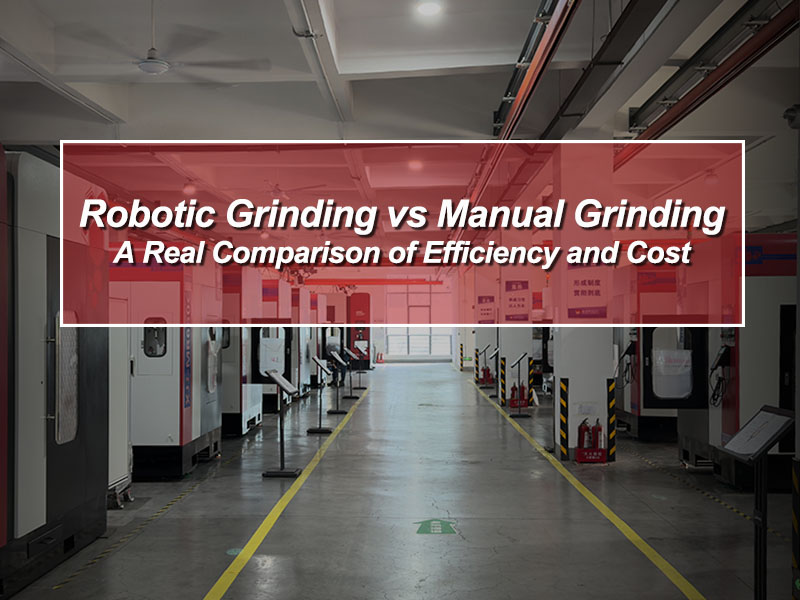
    Robotic Grinding vs Manual Grinding: A Real Comparison of Efficiency and Cost   Grinding is a critical step in the casting finishing process. Traditionally, most foundries rely on manual grinding, but this approach is increasingly facing limitations in efficiency, cost, and quality stability. One major difference between manual and robotic grinding is productivity. Manual grinding efficiency depends heavily on individual skill and fatigue levels. In contrast, robotic grinding systems operate continuously with stable cycle times. In many foundries, a single robotic cell can replace multiple manual grinding stations. Another key factor is quality consistency. Manual grinding often leads to variation due to differences in operator technique. Robotic systems follow predefined paths and maintain constant pressure and speed, ensuring uniform results across large production batches. The third factor is long-term operating cost. While manual grinding may require lower initial investment, labor costs, training expenses, and employee turnover significantly increase operational costs over time. Robotic grinding systems typically provide better cost efficiency during long-term production. Additionally, robotic grinding improves workplace conditions by reducing worker exposure to dust and noise. NEVIEW grinding robots are specifically designed for casting applications. With high structural rigidity and stable grinding control, they help foundries achieve higher productivity and consistent finishing quality. As manufacturing automation advances, robotic grinding is rapidly becoming a standard solution in modern foundries.
    Read More
  • Why More Foundries Are Adopting Robotic Grinding Systems
    Why More Foundries Are Adopting Robotic Grinding Systems
    Mar 11, 2026
      Why More Foundries Are Adopting Robotic Grinding Systems   In many foundries around the world, grinding has long been considered a routine post-processing operation. However, from a manufacturing perspective, it is often the most unstable step in the production process. While significant investments have been made in melting, molding, and machining automation, many foundries still rely heavily on manual grinding during the finishing stage. As labor shortages intensify and quality standards increase, more manufacturers are turning to robotic grinding systems to address these challenges. Among the emerging solutions in this field, NEVIEW grinding robots are becoming an important option for foundries seeking automation upgrades.   The Growing Limitations of Manual Grinding Traditional grinding typically involves workers using handheld grinders or abrasive tools to remove excess material from castings. Although flexible, this method presents several structural problems. Labor Shortage Grinding jobs often involve dust, noise, and physically demanding work. As a result, many manufacturers face increasing difficulty recruiting and retaining skilled workers. High turnover rates and long training cycles further complicate workforce management.   Limited Productivity Growth Manual grinding efficiency depends heavily on individual skill and experience. As production volumes increase, this variability makes it difficult to maintain consistent throughput. Fatigue, shift changes, and operator differences all contribute to fluctuating productivity levels.   Inconsistent Surface Quality For industries such as automotive, heavy machinery, and industrial equipment, surface finishing quality has become increasingly critical. Manual grinding often results in: inconsistent material removal varying surface roughness occasional over-grinding or under-grinding Even experienced operators cannot maintain identical results over long working hours.   How Robotic Grinding Is Transforming Foundry Operations Industrial robots have been used in manufacturing for decades, but robotic grinding technology has matured significantly in recent years. Compared with manual grinding, robotic systems provide several advantages. Consistent Processing Quality Robots operate based on predefined paths and parameters. This ensures that every casting is processed with the same trajectory, pressure, and timing. Consistency becomes significantly easier to maintain in mass production.   Higher Production Efficiency Robotic grinding systems can operate continuously with predictable cycle times. With automated loading systems, a single robotic cell can often replace multiple manual grinding stations while maintaining stable productivity.   Improved Workplace Environment Grinding operations generate substantial dust and noise. Robotic cells typically incorporate enclosed grinding units and dust collection systems, which greatly improve the workshop environment and reduce worker exposure.   Why Foundries Choose NEVIEW Grinding Robots In robotic grinding applications, the key factor is not just the robot itself, but the complete process solution. NEVIEW’s extensive experience in casting finishing allows its systems to better handle complex foundry components. Foundry-Focused System Design NEVIEW grinding systems are designed specifically for casting applications, taking into account: complex casting geometries production batch variations high-force grinding requirements   High-Rigidity Grinding Architecture Grinding castings often requires significant contact force. NEVIEW systems are engineered with high structural rigidity to maintain stable machining performance.   Multi-Axis Coordinated Motion For complex surfaces, NEVIEW systems utilize multi-axis coordinated control to ensure precise and stable grinding across difficult geometries. This capability is particularly valuable for automotive castings, valve components, and heavy machinery parts.   Conclusion The foundry industry is undergoing a quiet transformation. As automation continues to expand, robotic grinding is rapidly becoming an essential component of modern casting production. For manufacturers seeking higher efficiency, consistent quality, and reduced labor dependency, robotic grinding represents not just a technological upgrade—but a strategic investment in long-term competitiveness. NEVIEW continues to provide advanced robotic grinding solutions designed specifically for foundry applications.    
    Read More
  • Why More Foundries Are Replacing Manual Grinding with Robots
    Why More Foundries Are Replacing Manual Grinding with Robots
    Mar 01, 2026
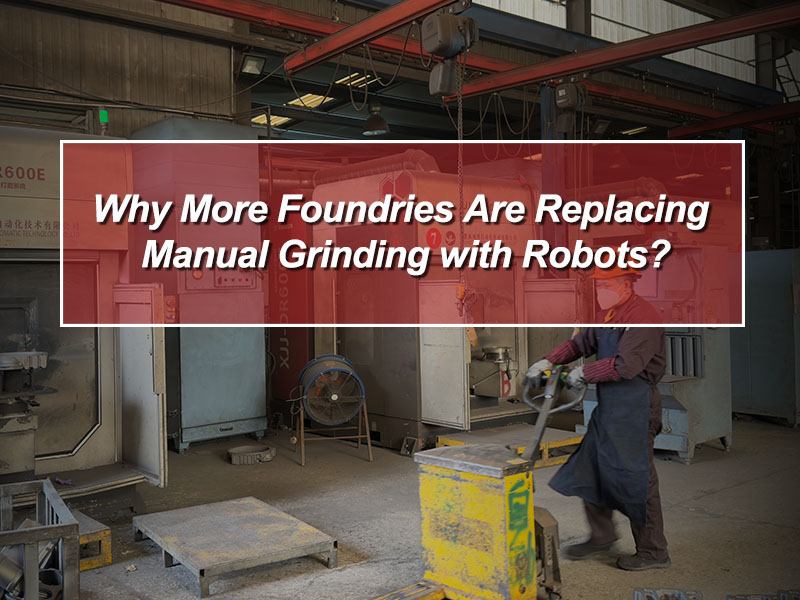
    Why More Foundries Are Replacing Manual Grinding with Robots Grinding has long been one of the most difficult processes to standardize in the foundry industry. It relies heavily on operator experience, yet has a decisive impact on final surface quality. The biggest weakness of manual grinding is not speed — it is inconsistency. Different operators and shifts produce different results, leading to high rework rates and unstable downstream processes. Labor cost is no longer a controllable advantage. Skilled grinders are difficult to recruit and retain. Once personnel change, production stability is immediately affected. Health, safety, and environmental pressure continue to increase. Dust, noise, and repetitive heavy labor make grinding one of the highest-risk operations in a foundry. This is why robotic grinding is becoming a strategic upgrade. NEVIEW robotic grinding systems integrate six-axis industrial robots, constant-force control, flexible tooling, and process databases to deliver: Repeatable grinding paths Consistent surface quality 24/7 stable operation Traceable and optimizable process parameters For foundries, this is not just automation — it is the industrialization of grinding quality.
    Read More
  • Human-Robot Collaboration: The Most Practical Path for Automated Grinding Today
    Human-Robot Collaboration: The Most Practical Path for Automated Grinding Today
    Dec 01, 2025
    Human-Robot Collaboration: The Most Practical Path for Automated Grinding Today Many customers ask, “Can we achieve fully unmanned grinding?” The reality is: full automation isn’t feasible yet. The most effective approach today is human-robot collaboration.  1.Why Is Full Automation Difficult?   Castings vary in deformation, batch differences, and irregular flash shapes. Robots excel at repetition, not judgment. 2.Human-Robot Collaboration Is More Efficient The optimal workflow: manual loading/unloading, NEVIEW robots handling the main grinding paths, and humans handling the few ultra-complex areas. 3.Robots Handle the Standardized 80% NEVIEW’s high-rigidity robotic arm and automatic path correction cover most standardized zones effectively.  4.Safety Benefits Are Underrated   Dust, noise, and vibration can harm workers. Robots isolate these hazards inside a fully enclosed safety cell. 5.More Predictable ROI   With faster deployment and lower risk, this model offers predictable ROI and is widely accepted in global factories. Real automation isn’t about replacing people — it’s about letting humans and robots each do what they do best. NEVIEW’s automation solutions are helping foundries worldwide achieve more stable and modern production.
    Read More
  • Why Are Aluminum Die-Casting Parts Ideal for Robotic Grinding?
    Why Are Aluminum Die-Casting Parts Ideal for Robotic Grinding?
    Nov 25, 2025
    Why Are Aluminum Die-Casting Parts Ideal for Robotic Grinding? Aluminum die-casting parts are widely used in automotive, motors, and consumer electronics. They require high consistency and stable finishing quality. Robotic grinding offers significant advantages over manual work. 1.Aluminum Works Well with Constant-Force Control NEVIEW robots use force-control compensation, adapting to dimensional variations for smoother, more uniform grinding. 2.Ideal for High-Volume Production Die-casting lines often run 24/7. Robots maintain consistent cycle times and maximize productivity. 3.Grinding Paths Are Easy to StandardizeGrinding Paths Are Easy to Standardize Flash lines and parting lines are predictable, enabling efficient programming and fast deployment worldwide. 4.Reduce Human-Caused Defects Manual operators may cause dents or over-grinding, while robots deliver millimeter-level precision. 5.Better Dust Control & Cleaner Work Environment With integrated dust extraction, robotic grinding meets strict environmental requirements in Western markets. The characteristics of aluminum parts make them ideal for robotic grinding.   NEVIEW provides proven aluminum grinding solutions to customers worldwide.    
    Read More
  • Why Is the Foundry Industry Rapidly Adopting Automated Grinding?
    Why Is the Foundry Industry Rapidly Adopting Automated Grinding?
    Nov 24, 2025
    Why Is the Foundry Industry Rapidly Adopting Automated Grinding? As global manufacturing continues to upgrade, automation in the foundry industry has become irreversible. Especially in aluminum die casting, automotive parts, and metal machining, factories are increasingly moving from manual grinding to robotic grinding and deburring. The reason is simple: modern competition no longer tolerates inconsistent, experience-based production. 1.Stability Is the New Competitive Edge Manual grinding often lacks consistency. Robots execute precise paths with constant force, ensuring predictable and stable part quality. 2.Labor Shortage Is a Global Issue Fewer workers are willing to engage in high-dust, high-noise, repetitive jobs. Automation reduces dependency on skilled labor and minimizes hiring pressure. 3.Complex Casting Requires Better Processes Deep cavities, angled surfaces, and complex geometries make manual work challenging. NEVIEW’s self-developed 4-axis grinding robot provides high rigidity and flexibility to address these difficulties. 4.Stricter Safety & Compliance Standards Regions such as the EU and North America enforce strict dust and safety regulations. Automated systems significantly reduce worker exposure to hazardous environments. Automated grinding is not about replacing workers—it’s about increasing competitiveness. NEVIEW will continue delivering reliable automation solutions to foundries worldwide.  
    Read More
  • 8-Axis Coordination: High-Precision Grinding Solutions for Complex Castings
    8-Axis Coordination: High-Precision Grinding Solutions for Complex Castings
    Nov 19, 2025
    8-Axis Coordination: High-Precision Grinding Solutions for Complex Castings Complex castings, such as automotive and aerospace parts, pose challenges for traditional robots or manual grinding due to insufficient rigidity and inconsistent precision. NEVIEW 8-axis coordinated grinding robots use high-rigidity structures and multi-degree-of-freedom motion for multi-angle coordinated grinding. With laser detection and automatic compensation, burrs are identified in real time and pressure/path adjusted automatically for high precision and repeatability. Compared with 5-axis systems, 8-axis robots handle more complex angles and larger or irregular parts. Single-fixture full-process grinding increases productivity by over 30%, reducing manual intervention and safety risks.  
    Read More
  • The Hidden Costs of Manual Deburring vs. Automated Grinding
    The Hidden Costs of Manual Deburring vs. Automated Grinding
    Oct 28, 2025
    The Hidden Costs of Manual Deburring vs. Automated Grinding   True Cost of Manual Grinding While manual grinding may seem inexpensive, hidden costs include: Frequent rework due to inconsistent finish High worker turnover and training expenses Lost efficiency from downtime and fatigue NEVIEW’s Automated Advantage The NEVIEW GRINDING ROBOT eliminates these costs by delivering: Precision grinding with minimal rework Deburring automation that reduces scrap Continuous operation that maximizes throughput ROI for Foundries Faster project delivery Reduced operating costs Improved long-term profitability 👉 Investing in NEVIEW GRINDING ROBOT is not just automation—it’s financial optimization.
    Read More
  • ROI of NEVIEW GRINDING ROBOT
    ROI of NEVIEW GRINDING ROBOT
    Oct 23, 2025
    ROI of NEVIEW GRINDING ROBOT   One key question many companies ask: How long does it take for a grinding robot to pay for itself? The answer: usually less than two years. Investment Benefits Labor Savings – One robot can replace 3–5 workers Lower Scrap Rate – Reduced human error, improved yield Higher Productivity – Efficiency increased by 2–3 times Hidden Cost Savings – Fewer accidents and downtime losses Case Reference Some customers report that after deploying NEVIEW GRINDING ROBOT, production costs dropped by 20–30% on average, while order delivery capacity significantly increased. Conclusion An investment in NEVIEW GRINDING ROBOT is not just about reducing costs—it’s about boosting competitiveness and achieving real ROI through intelligent manufacturing.
    Read More

leave a message

leave a message
If you are interested in our products and want to know more details,please leave a message here,we will reply you as soon as we can.
submit
Contact Us: judy@ahxjj.cn

home

products

WhatsApp

Contact Us