inquiry
Leave A Message
If you are interested in our products and want to know more details,please leave a message here,we will reply you as soon as we can.
submit
Home

casting deburring robot

casting deburring robot

  • Foundries Can’t Keep Grinders. What Work Can a Grinding Robot Actually Take?
    Foundries Can’t Keep Grinders. What Work Can a Grinding Robot Actually Take?
    Sep 10, 2026
    Foundries Can’t Keep Grinders. What Work Can a Grinding Robot Actually Take?     The hardest shift to staff in a foundry is often not melting or molding. It is grinding. Day shift can still be patched together. Night shift, hot weather, and year-end rush orders are when the finishing room empties first. The work is not optional. Unground gates, proud parting lines, and hole-edge burrs show up later in machining, assembly, and paint. The job is dirty, loud, and dusty. Numb hands and sore wrists are normal. When a skilled grinder leaves, you do not replace the “feel” in a week. Most plants looking at grinding robots are not chasing a slogan. They are asking a simpler question: can this line still ship tomorrow. What actually wears people out From outside, grinding looks like an angle grinder on a casting. Anyone who has stood in the booth knows fatigue is only part of it. The harder problem is inconsistency. Castings from the same mold and the same heat do not arrive the same. Gate stubs vary in height. Flash is thick on one piece and thin on the next. Some parts are slightly warped. Some cavities will not accept a wheel. A skilled operator compensates by pressure, angle, and a couple of extra passes. A new hire under-grinds or knocks a datum face down. Piecework continues. Quality starts to drift. Turnover makes it worse. Training a finisher takes time. Losing one experienced person takes cycle time and rework with them. Job ads can stay online. Castings will not wait. Dust and labor rules are also pushing the job out of the plant. Iron dust, aluminum smear and noise, steel cutting load—none of that is solved by handing out earplugs. “Just hire two more people” is getting harder to use as a finishing strategy. That is why automated grinding is entering foundries. Finishing has started to hold the whole line back. Why casting grind is more awkward than machining Machining starts from a blank that already has datums and tighter stock. Casting grind starts from something else. Gate remnants can be high. Cutting force jumps immediately. Parting lines, vents, cold-shut edges, and ingates are irregular. The tool has to reach in without thinning the wall next to it. Sand castings and permanent-mold parts, iron and die-cast aluminum, do not leave the same burr. Die-cast flash can be thin and long. A sand-cast gate can be thick and hard. Then there is casting variation. A millimeter or two on the same part number is not rare. A robot that only repeats one frozen path will grind air one day and cut into a rib the next. That is why a demo video can look clean and the same cell can disappoint on a real floor. Demo parts are usually better behaved than incoming work. The hard part is not whether the arm can move. It is whether three things can hold at once: the part can be located with acceptable repeatability; the path can move with the casting error; tooling and force can change by material and by feature. Miss one, and the cell still runs. The quality does not. What a robot can take—and what it should not Start with the good fit. Stable volume, a short list of part numbers, and a grinding spec you can write down. Housings, brackets, valve bodies, wheel-type parts where the same gates, the same flash lines, and the same hole edges come back every day. That repetition is what a cell is built for. Dual stations exist for a practical reason: grind on one side, load on the other, so the machine is not waiting. For mid-volume small and medium iron or aluminum parts, that layout matches finishing better than a single fixture and a standing robot. Heavy gates and thick flash are where people fade. Handheld tools lose force late in a shift and the cut goes uneven. A rigid, high-payload grinding unit is often steadier there. What matters on site is whether the table and arm can take the cutting force, and whether the enclosure actually contains dust and sparks—not how the machine photographs. Now the poor first candidates. Job shops with constant part-number changes will burn time on fixtures and teaching. If the casting may be revised before the clamp is finished, the cell becomes furniture. That is not “automation is impossible.” It means changeover rate and who owns the program have to be answered first. Parts with almost no stable datum, or with very large piece-to-piece spread, also need caution. A dead path without measurement and compensation can create more rework than a person. Distortion-prone parts—thin aluminum walls, some covers—need force control, not more stiffness. If the machine cannot go light where it must go light, cosmetic faces ripple. One more miss: grinding is only one slice of finishing. If cutting and shot blast are unstable, and sorting and transfer are still a crowd of people, one grinding booth just moves the bottleneck a meter downstream. Iron, aluminum, steel, and mega die cast are not the same job Cast iron: hard gates, heavy dust, fast wheel wear. The unit has to hold load, and dust collection cannot be decorative. Once iron volume is there, dual stations and dual spindles show up because waiting time is expensive. Aluminum is different. It smears. Surfaces mark easily. Many aluminum jobs need flash gone and edges even, without wounding a datum. Tools change: disc cutters, mills, belts, brushes. An iron-grinding wheel strategy does not transfer. Thin walls need fine current, position, and torque loops. If those loops are crude, appearance parts show waves. Steel asks for rigidity. The same gate size cuts harder than iron. If payload and table capacity are short, a pretty path still chatters. Large integrated die-castings are another project type. Big envelopes, long flash, many surfaces, and a takt set by the die-cast cell. Scaling a standard booth is not the work. Floor space, handoff from the casting island, and fixture strategy decide the project. You do not buy “a robot.” You buy a finishing method for a material, a geometry, a volume, and a process. What plants usually underestimate Fixtures. Simple nests are fast and cheap, and they move. Self-clamping nests are stable and slow to build. Some machines add a press-down axis to drop some cylinder modules and cover more part numbers. “The robot has a camera, just dump the parts” is still rare on real foundry floors. Vision and auto-locate, when they are used, are there to cut hard locators and cut reteaching—not to delete fixturing. Consumables and process. Wheels, burrs, discs, flap wheels, rotary files for iron and steel; a different set for aluminum. The wrong tool on the right machine still makes scrap. A cell does not arrive knowing which cutter belongs on which feature. Incoming consistency. Mold upkeep, pouring stability, and how the gate was cut before grind all land on the program. Compensation can swallow some size scatter. It cannot swallow a process that is not under control. Before automation, tighten gate location and flash condition. Do not ask the cell to eat every upstream swing. Ownership. Someone has to own programs, changeovers, wheel changes, and compensation values. A supplier cannot live in the plant forever. If nobody on the floor will touch the teach pendant, a good start-up decays in a few months. Four questions before you buy Will these part numbers still run in six months? Is there enough daily volume to feed a full shift? Can process engineering mark the gates, the flash, and the faces that must not be touched? Is there a person who will own fixtures and programs? If two of those are blank, do not start with “lights-out.” Start with the dirtiest, heaviest, most repetitive features. Lock takt and quality. Then decide whether bin picking, infeed conveyors, or sorting belong in the next step. For foundries and die-casters that already have stable volume, the value is usually plain: quality that does not collapse when a skilled grinder quits; finishing that can still run on night shift; fewer dust and labor fights; the same part number finished to the same standard, regardless of who is on the wheel that day. Companies that live in casting finishing—Neview is one of them—are judged on whether compensation tracks casting scatter, whether a heavy gate can be cut, whether aluminum can be worked lightly, whether iron and steel can be held, and whether the grind cell can connect to handling later. Those points only mean something against a real part and a real volume. Automated grinding will not clean up an entire foundry. It is good at the work that repeats every day, can be specified, and has already worn people down. The shop-floor test is still the same: when the skilled hand is gone, does the part still come out the same.  
    Read More

  • Beyond Manual Grinding: How NEVIEW Casting Grinding Robots Are Solving the Foundry Labor Crisis
    Beyond Manual Grinding: How NEVIEW Casting Grinding Robots Are Solving the Foundry Labor Crisis
    Aug 08, 2026
    Beyond Manual Grinding: How NEVIEW Casting Grinding Robots Are Solving the Foundry Labor Crisis   Walk into any foundry today, and you’ll likely hear the same pain point: it’s getting harder and harder to find skilled grinding operators. The work is physically demanding, noisy, dusty, and potentially hazardous. Young workers are increasingly unwilling to take on these roles, and the aging workforce means decades of expertise are retiring from the shop floor. For foundries around the world, this isn’t just an HR problem—it’s an existential challenge. NEVIEW provides the answer with advanced casting grinding robots built specifically to handle the harsh realities of post-casting finishing. The True Cost of Manual Grinding Manual grinding appears cheaper at first glance, but hidden costs accumulate fast. Inconsistent pressure leads to over-grinding, scrap parts, and rework. Operators tire, causing cycle-time variations and quality dips during late shifts. There’s also the rising expense of personal protective equipment, ventilation upgrades, and work-related injury claims. When you calculate total cost per acceptable part, manual processes often prove far more expensive than automation. Enter the NEVIEW Casting Grinding Robot NEVIEW casting grinding robots are engineered from the ground up to tackle iron, steel, and aluminum castings of varying complexity. Equipped with high-torque spindles, force-sensing compliance, and intelligent path planning, these robots remove gates, parting lines, and flash with precision that manual operators struggle to match consistently. The enclosed work cell contains dust and noise, transforming a dirty, dangerous corner of the foundry into a clean, monitored, and predictable operation. How Force Control Changes the Game A key differentiator for NEVIEW robotic grinding systems is real-time force feedback. Unlike rigid CNC machines or basic robotic position control, NEVIEW robots feel the part. The end effector maintains a constant contact force against contoured surfaces, automatically compensating for part-to-part dimensional variation—a common reality in sand casting. This adaptive capability means fewer scrapped castings and more uniform output, even as tooling wears or mold shifts occur between batches. Seamless Integration, Not an Island Modern foundries don’t need a standalone robot that creates a bottleneck. NEVIEW designs its grinding cells for easy integration with existing shakeout, shot blasting, and machining lines. The vision system can recognize different part models, call up the correct grinding program, and process mixed batches without operator intervention. This flexibility is essential for jobbing foundries that handle diverse, small-to-medium production runs. Searches like “flexible casting grinding automation” and “NEVIEW foundry robot” naturally bring foundry engineers to content that addresses exactly these challenges. Building Workforce Resilience Far from “stealing jobs,” NEVIEW grinding robots let manufacturers redeploy their best people to higher-value tasks: quality inspection, process optimization, and running multiple cells. Companies that automate grinding report improved employee retention because they can offer upskilling programs rather than condemning workers to a lifetime behind a grinding wheel. This message resonates in recruitment and corporate branding, adding an indirect but powerful SEO and PR benefit. Conclusion The labor shortage in foundries isn’t a temporary trend—it’s a structural shift. Foundries that act now to adopt NEVIEW casting grinding robots will build a competitive moat: consistent quality, controlled costs, and a workforce focused on growth, not just survival. Explore the full range of NEVIEW automated grinding solutions and future-proof your finishing room today.  
    Read More
  • Neview Grinding Robots: The Innovative Pioneers in Post - casting Processing
    Neview Grinding Robots: The Innovative Pioneers in Post - casting Processing
    Jun 30, 2026
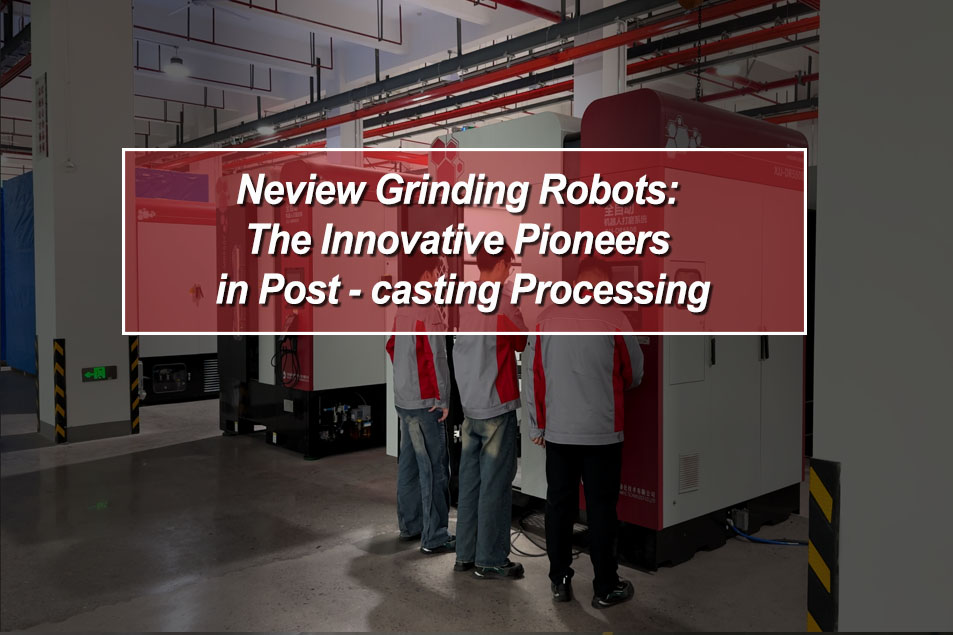
    Neview Grinding Robots: The Innovative Pioneers in Post - casting Processing Post - casting processing is a critical link in determining the final quality of castings. With its advanced technology and unique functions, Neview's grinding robots have become innovative pioneers in this field. The eight - axis seven - linkage structure of Neview's grinding robots endows them with unparalleled flexibility and adaptability. It can perform all - around and multi - angle grinding on the surface of castings, ensuring that every corner is finely processed. Whether it's a narrow gap or a complex contour, it can handle them with ease. This flexibility not only improves the grinding efficiency but also greatly enhances the grinding quality, making the casting surface smoother and more uniform, meeting the strict quality requirements of the high - end market. When dealing with different types of castings, Neview's grinding robots demonstrate strong adaptability. Whether they are small precision castings, such as the die - cast shells of electronic components, or large heavy - duty castings, such as the key components of construction machinery, it can precisely adjust the grinding parameters through the intelligent control system and advanced sensor technology to achieve the best grinding effect. For thin - walled castings that are prone to deformation, the robot can effectively remove burrs and defects without damaging the casting through the intelligent compensation and flexible fitting technology, ensuring the dimensional accuracy and surface quality of the casting. The automatic error detection and compensation system of Neview's grinding robots is another highlight. During the casting process, due to various factors, some dimensional and shape errors inevitably occur in the castings. This system can detect these errors in real - time and automatically adjust the grinding path to ensure that the grinding accuracy is not affected. This function greatly reduces the defective rate caused by casting errors, improves the consistency and reliability of products, and saves a large amount of cost and time for foundries. In addition, Neview's grinding robots are also equipped with an intelligent operation interface and remote monitoring function. Operators can easily set grinding parameters, monitor the running status of the robot, and carry out remote control through the intuitive interface. This not only improves the convenience of operation but also enables foundries to achieve intelligent management of the production process, promptly discover and solve problems, and further improve production efficiency and product quality.
    Read More
  • Grinding Consistency in Casting Finishing – How Robotic Grinding Improves Stability
    Grinding Consistency in Casting Finishing – How Robotic Grinding Improves Stability
    Jan 21, 2026
    Grinding Consistency in Casting Finishing – How Robotic Grinding Improves Stability   When discussing grinding automation in the casting industry, conversations often focus on productivity.However, in real production environments, stability—not speed—is the variable that determines long-term cost and quality. 1. The Hidden Cost of Manual Grinding: Lack of Repeatability Manual grinding depends heavily on individual skills, making consistency difficult to maintain. 2. How Robotic Grinding Achieves Consistent Results Robotic systems use parameterized paths, orientation control, and force regulation to achieve repeatable results. 3. System-Level Benefits of Consistency Improved consistency reduces rework, stabilizes quality, and simplifies customer audits.
    Read More
  • Why Are Aluminum Die-Casting Parts Ideal for Robotic Grinding?
    Why Are Aluminum Die-Casting Parts Ideal for Robotic Grinding?
    Nov 25, 2025
    Why Are Aluminum Die-Casting Parts Ideal for Robotic Grinding? Aluminum die-casting parts are widely used in automotive, motors, and consumer electronics. They require high consistency and stable finishing quality. Robotic grinding offers significant advantages over manual work. 1.Aluminum Works Well with Constant-Force Control NEVIEW robots use force-control compensation, adapting to dimensional variations for smoother, more uniform grinding. 2.Ideal for High-Volume Production Die-casting lines often run 24/7. Robots maintain consistent cycle times and maximize productivity. 3.Grinding Paths Are Easy to StandardizeGrinding Paths Are Easy to Standardize Flash lines and parting lines are predictable, enabling efficient programming and fast deployment worldwide. 4.Reduce Human-Caused Defects Manual operators may cause dents or over-grinding, while robots deliver millimeter-level precision. 5.Better Dust Control & Cleaner Work Environment With integrated dust extraction, robotic grinding meets strict environmental requirements in Western markets. The characteristics of aluminum parts make them ideal for robotic grinding.   NEVIEW provides proven aluminum grinding solutions to customers worldwide.    
    Read More

leave a message

leave a message
If you are interested in our products and want to know more details,please leave a message here,we will reply you as soon as we can.
submit
Contact Us: judy@ahxjj.cn

home

products

WhatsApp

Contact Us