inquiry
Leave A Message
If you are interested in our products and want to know more details,please leave a message here,we will reply you as soon as we can.
submit
Home

Cast Fettling Machine

Cast Fettling Machine

  • Key Issues in Selecting Grinding Robots for Castings — A Practical Shop-Floor Perspective
    Key Issues in Selecting Grinding Robots for Castings — A Practical Shop-Floor Perspective
    Sep 03, 2026
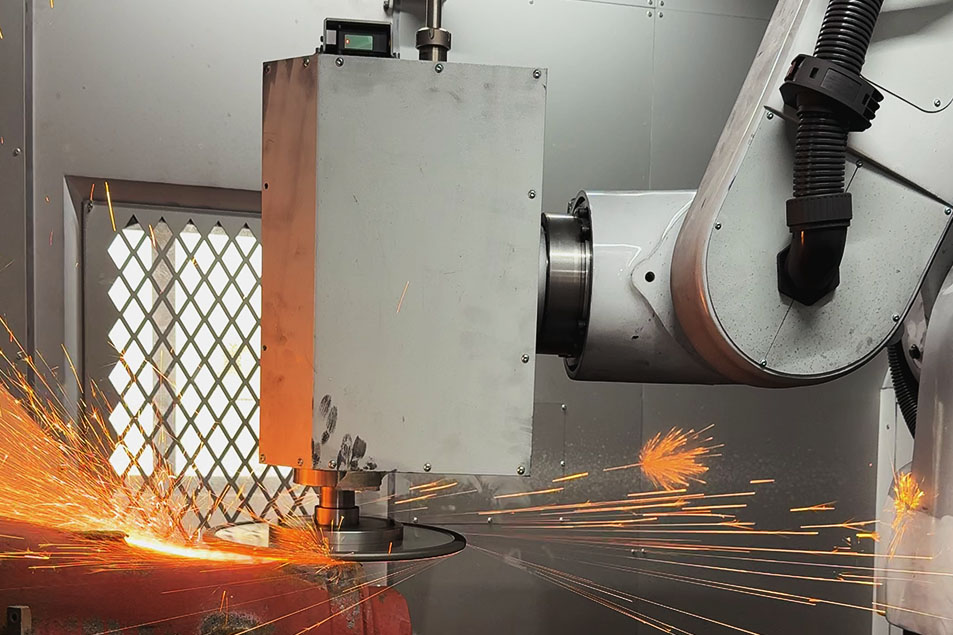
    Key Issues in Selecting Grinding Robots for Castings — A Practical Shop-Floor Perspective AbstractImproper selection of grinding robots for castings is a common problem in foundry automation projects. This article systematically examines three critical factors from an engineering application standpoint: workpiece positioning and raw casting dimensional consistency, abrasive wear compensation, and the match between programming/maintenance capability and production volume. The analysis shows that robot arm specifications are not the primary selection criterion. Instead, peripheral process design and production characteristics determine project success. The article concludes with selection recommendations for different production scenarios. Keywordscasting grinding robot selection; workpiece positioning; abrasive wear compensation; production batch size; automated grinding 1、IntroductionFoundries typically adopt grinding robots due to labor shortages, rising manual grinding costs, and harsh working conditions. However, field observations show that a significant portion of installed grinding robots operate at low utilization or sit idle. Most failures are not caused by insufficient robot performance, but by inadequate evaluation of process conditions, product characteristics, and in-house maintenance capability during the selection stage. This article discusses the often-overlooked aspects of grinding robot selection based on real foundry situations. 2、Workpiece Positioning: An Underestimated Prerequisite for AutomationManual grinding allows workers to adjust part position and orientation flexibly to accommodate raw casting deformation and dimensional variation. Robot grinding requires the workpiece to enter the working zone in a repeatable position every time. If positioning error exceeds the grinding trajectory tolerance, the result is missed spots, over-grinding, or tool collision. In production, sand casting raw dimensions often fluctuate by ±2 mm or more, and thin-wall parts warp further after heat treatment. If the fixture design is poor — for example, using two rigid pins when the cored holes are offset — loading becomes difficult, or forced loading shifts the part out of position. Therefore, before selection, foundries must statistically evaluate raw casting dimensional consistency. If necessary, add a rough machining operation to create a stable datum, or adopt flexible positioning solutions. 3、Abrasive Wear Compensation: The Core Dynamic Process ChallengeGrinding discs, rotary burrs, and flap wheels used in casting cleanup are high-consumption tools with much faster wear rates than metal cutting tools. Under fixed-path programming, tool diameter reduction changes the contact position and grinding pressure, causing deburring quality to degrade over time. Some systems use floating spindles or force control for passive compensation, but these only mitigate uniform wear and respond poorly to sudden burr thickness changes. A more reliable approach is to establish abrasive life management, including scheduled replacement intervals, spindle current monitoring, or vision-based remaining tool size detection. When selecting a system, pay close attention to whether the controller supports parameterized wear compensation and tool life statistics. 4、Programming and Maintenance Capability: The Overlooked Long-Term CostGrinding robot trajectory programming is more complex than welding or material handling. Curved surfaces, hole openings, and corners require frequent orientation adjustments and collision avoidance, leading to long commissioning times — from several days to several weeks per product. After startup, product tweaks, abrasive changes, and batch variations all require program parameter modifications. If the foundry has no dedicated person responsible, and relies entirely on the integrator's remote support, downtime increases significantly. Maintainability should be a key selection criterion, including programming interface usability, parameter backup and recovery functions, and training duration. At the same time, the plant should train at least one technician who can handle basic alarms and program adjustments. 5、Production Volume and Part Complexity: The Boundary of Automation EconomicsA common misconception is that more complex castings automatically justify higher-configuration robots. In reality, automation economics depend first on production volume, then on geometric complexity. For annual volumes below a few thousand pieces, programming and commissioning costs amortize poorly, and frequent changeovers reduce equipment utilization. Conversely, products with annual volumes above tens of thousands, stable dimensions, and fixed burr locations offer strong automation value even if moderately complex. Before selection, conduct a product-process match analysis: count grinding points, evaluate reachability, measure dimensional variation range, and record monthly output. Then decide on robot type (standard six-axis, collaborative, or dedicated grinding cell) and peripheral configuration level.   6、ConclusionThe core of casting grinding robot selection is not comparing arm payload and repeatability. The real issues are workpiece positioning reliability, abrasive wear compensation strategy, in-house programming/maintenance capability, and the match between product volume and complexity. Foundries should complete raw casting statistical analysis, grinding point reachability mapping, and payback period calculation before procurement to avoid idle equipment caused by inadequate peripheral support.
    Read More

  • The Future of Foundries: Moving Forward with Neview Grinding Robots
    The Future of Foundries: Moving Forward with Neview Grinding Robots
    Apr 30, 2026
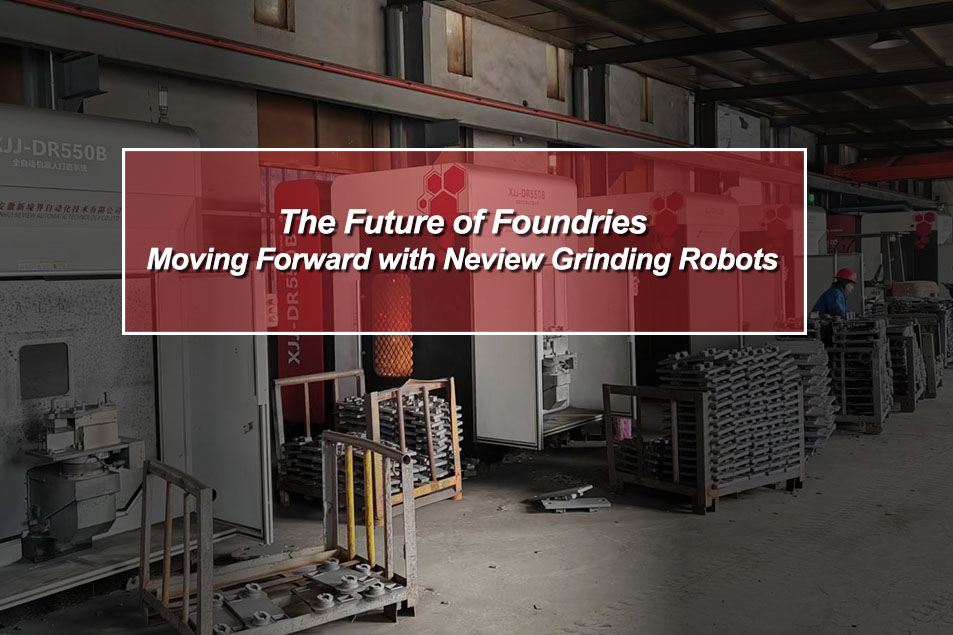
    The Future of Foundries: Moving Forward with Neview Grinding Robots With the rapid development of technology, the foundry industry is facing unprecedented changes. In this transformation, the grinding robots of Anhui Neview Automatic Technology Co., Ltd. are leading foundries towards a more intelligent and efficient future.   Neview grinding robots provide comprehensive solutions for foundries with their leading technology. From the high - precision grinding of complex castings to the powerful deburring of large castings, the robots are fully capable. Its unique eight - axis seven - linkage structure endows the robot with extremely high flexibility and precision, enabling it to perform meticulous operations on the surfaces of various complex castings, ensuring that every detail is perfectly processed.   The intelligent compensation and flexible fitting technology is the key for Neview grinding robots to adapt to diverse castings. When facing castings of different materials and shapes, the robot can achieve flexible grinding by intelligently controlling the current loop, position loop, and torque loop. This self - adapting ability enables the robot to efficiently complete grinding and deburring tasks without damaging the castings. Operators only need to make simple parametric modifications to enable the robot to quickly adapt to new types of castings, greatly improving the flexibility and efficiency of production.   The automatic error detection and compensation system is the core technology of Neview grinding robots to ensure quality. During the casting process, castings inevitably have some dimensional and shape errors. Neview grinding robots detect these errors in real - time through displacement sensors, quickly calculate in the background, and automatically correct the grinding path, ensuring that regardless of the errors of the castings, they can be accurately ground and deburred. This technology has greatly improved the stability of product quality, winning the trust and reputation of customers for foundries.   In addition to technological advantages, Neview also provides foundries with comprehensive service support. From pre - project equipment selection consultation to installation and commissioning, and then to later maintenance and technical upgrades, Neview's professional team always closely cooperates with foundries to ensure that the grinding robots can operate continuously and stably, creating maximum value for foundries.   Looking to the future, foundries
    Read More
  • Neview Grinding Robots - The Ideal Grinding Tool in the Era of Industry 4.0
    Neview Grinding Robots - The Ideal Grinding Tool in the Era of Industry 4.0
    Apr 13, 2026
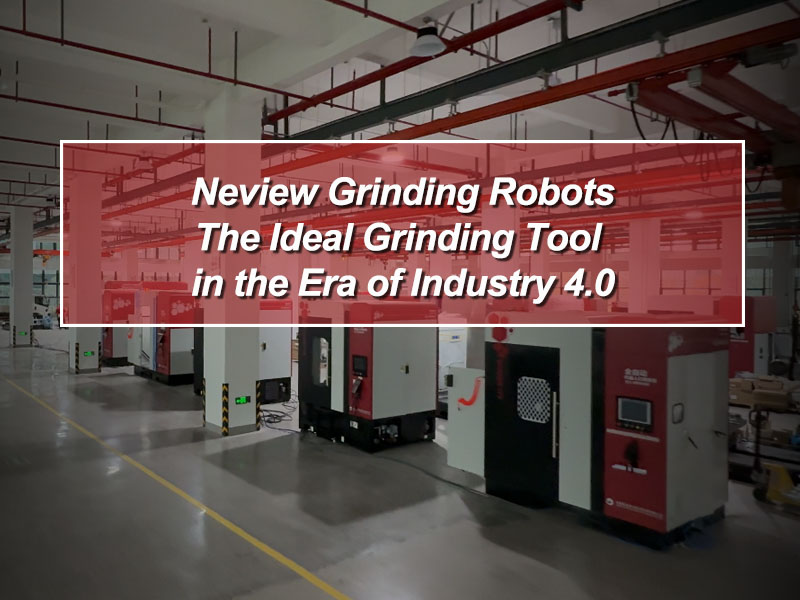
    Neview Grinding Robots - The Ideal Grinding Tool in the Era of Industry 4.0 With the advent of the Industry 4.0 era, the manufacturing industry is experiencing unprecedented changes. In this transformation, intelligence and automation have become the keys to improving production efficiency and product quality. The Neview grinding robots launched by Anhui Neview Automatic Technology Co., Ltd. perfectly meet the development needs of Industry 4.0 and have become a powerful tool for modern industrial grinding. Neview grinding robots are equipped with an advanced sensor system that can real - time perceive various data during the grinding process, such as the surface condition of the workpiece and changes in grinding force. Through accurate analysis of this data, the robot can automatically adjust grinding parameters to ensure that the grinding effect is always in the best state. This intelligent self - adaptation function makes the grinding process more flexible and efficient, capable of handling various complex workpieces and grinding requirements. From the perspective of the production process, Neview grinding robots have achieved seamless connection with other production equipment. It can work in coordination with other automated equipment in the production line, forming a highly integrated production system. This not only improves the coherence and coordination of the entire production process but also further enhances production efficiency and reduces potential risks caused by human intervention. In terms of environmental protection, Neview grinding robots also perform outstandingly. Their design fully considers dust collection and noise control, effectively reducing environmental pollution during the grinding process. This meets the requirements of modern industry for green production, enabling enterprises to fulfill their social responsibilities while pursuing efficient production and achieving sustainable development. With its excellent performance in intelligence, automation, integration, and environmental protection, Neview grinding robots are undoubtedly the ideal choice for grinding processes in the Industry 4.0 era, helping enterprises stand out in the fierce market competition.
    Read More

leave a message

leave a message
If you are interested in our products and want to know more details,please leave a message here,we will reply you as soon as we can.
submit
Contact Us: judy@ahxjj.cn

home

products

WhatsApp

Contact Us