Apr 02, 2026
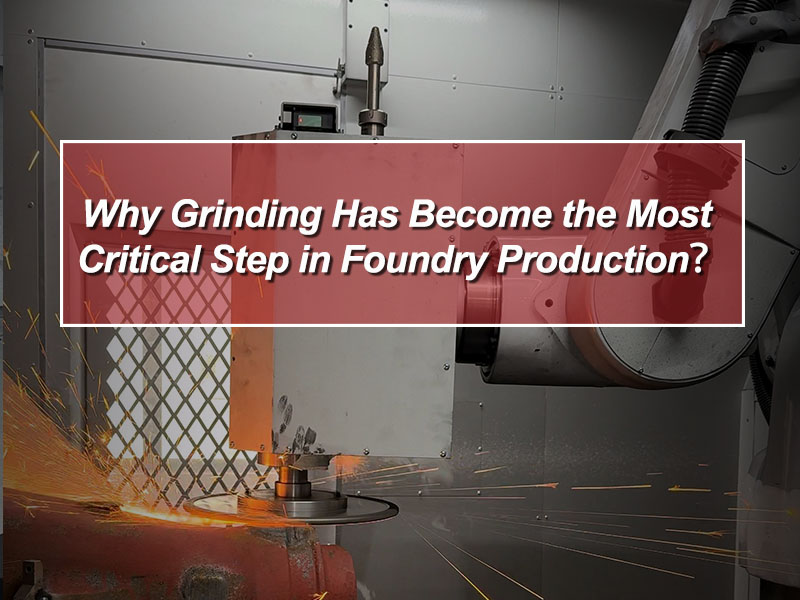
Why Grinding Has Become the Most Critical Step in Foundry Production?
1. Introduction: The Misunderstood Process
In traditional foundry operations, grinding has often been seen as a low-value, labor-intensive process. However, as customer expectations for casting quality increase, this perception is rapidly changing.
Grinding is no longer just a finishing step—it is a quality-defining stage that directly impacts product acceptance, performance, and brand reputation.
2. Surface Quality and Market Standards
Modern industries such as automotive, aerospace, and heavy machinery require increasingly strict surface standards.
Grinding determines:
Surface roughness
Edge finishing
Visual appearance
A poorly finished casting can fail inspection regardless of its internal quality.
3. Defect Exposure and Correction
Grinding is often the stage where internal defects become visible:
Porosity
Cracks
Shrinkage defects
If these issues are not identified and corrected properly, they can lead to product failure.
4. Productivity Impact
Inefficient grinding processes can create bottlenecks in production lines.
Manual grinding:
Slows down throughput
Causes inconsistency
Increases rework
Automated grinding systems eliminate these inefficiencies by ensuring predictable cycle times.
5. The Shift Toward Automation
Leading foundries are adopting robotic grinding not only to improve efficiency but also to standardize quality.
Advanced systems allow:
Stable processing parameters
Integration with production lines
Continuous operation
This transition represents a fundamental shift from labor-driven to system-driven production.
6. Conclusion
Grinding is no longer a secondary process—it is a core determinant of product quality and operational efficiency.
Read More




 IPv6 network supported