Feb 02, 2026
Disadvantages of Manual Grinding and the Inevitability of Robot Replacement: A Guide to Upgrading Casting Backend
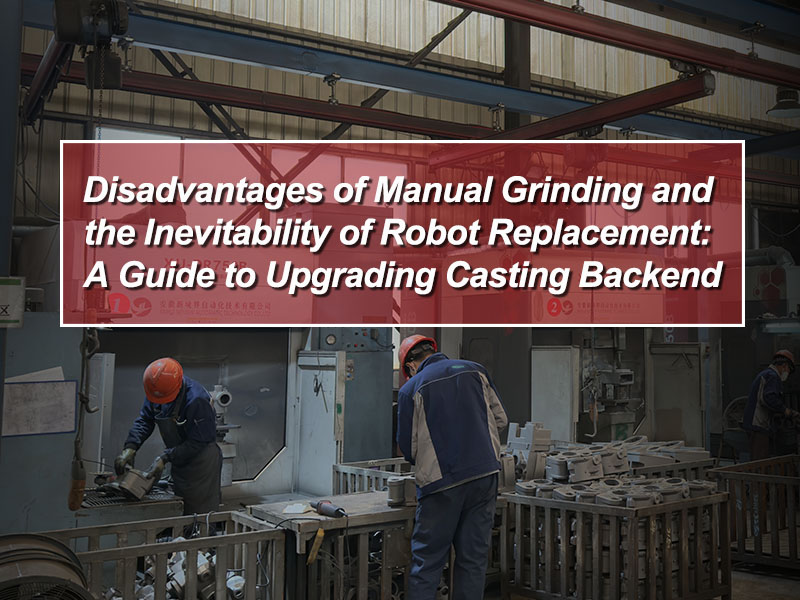
Manual grinding has a long history in the casting industry, but its disadvantages are becoming increasingly apparent: poor consistency, low efficiency, and high risks. Workers are exposed to dust and noise for extended periods, prone to occupational diseases, and grinding quality varies with experience, leading to high rework rates due to batch differences.
NEVIEW's grinding robot series, such as the MR-950C six-axis linkage equipment, completely overturns this model. It features ultra-high rigidity and intelligent compensation, automatically detecting errors via displacement sensors to correct paths, ensuring ±0.02mm precision. Compared to manual work, robots operate 24/7 uninterrupted, boosting efficiency by four times and significantly reducing operational costs.
In industry development, with digital transformation, manual grinding is being phased out. NEVIEW's AI-specific fixtures simplify structures, reduce constraints, and allow new products to adapt without reprogramming, speeding up launch cycles. Clients like China FAW and Dongfeng Motor have adopted our systems, achieving environmental upgrades and maximum value.
Embrace the robot era with NEVIEW's customized services, covering everything from cast iron to cast steel. Visit www.neviewgrinder.com to download the upgrade guide and start your smart manufacturing journey.
Read More




 IPv6 network supported